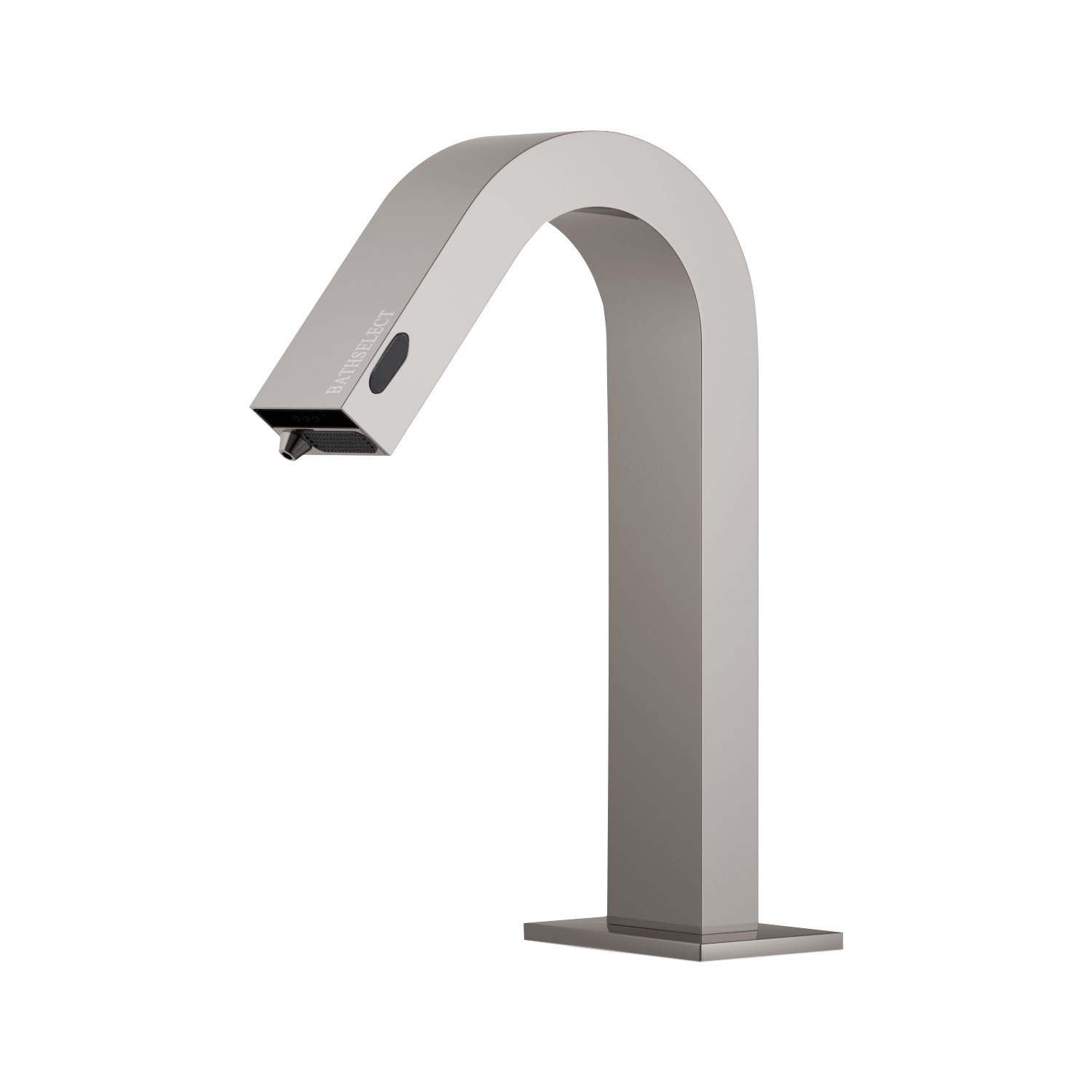
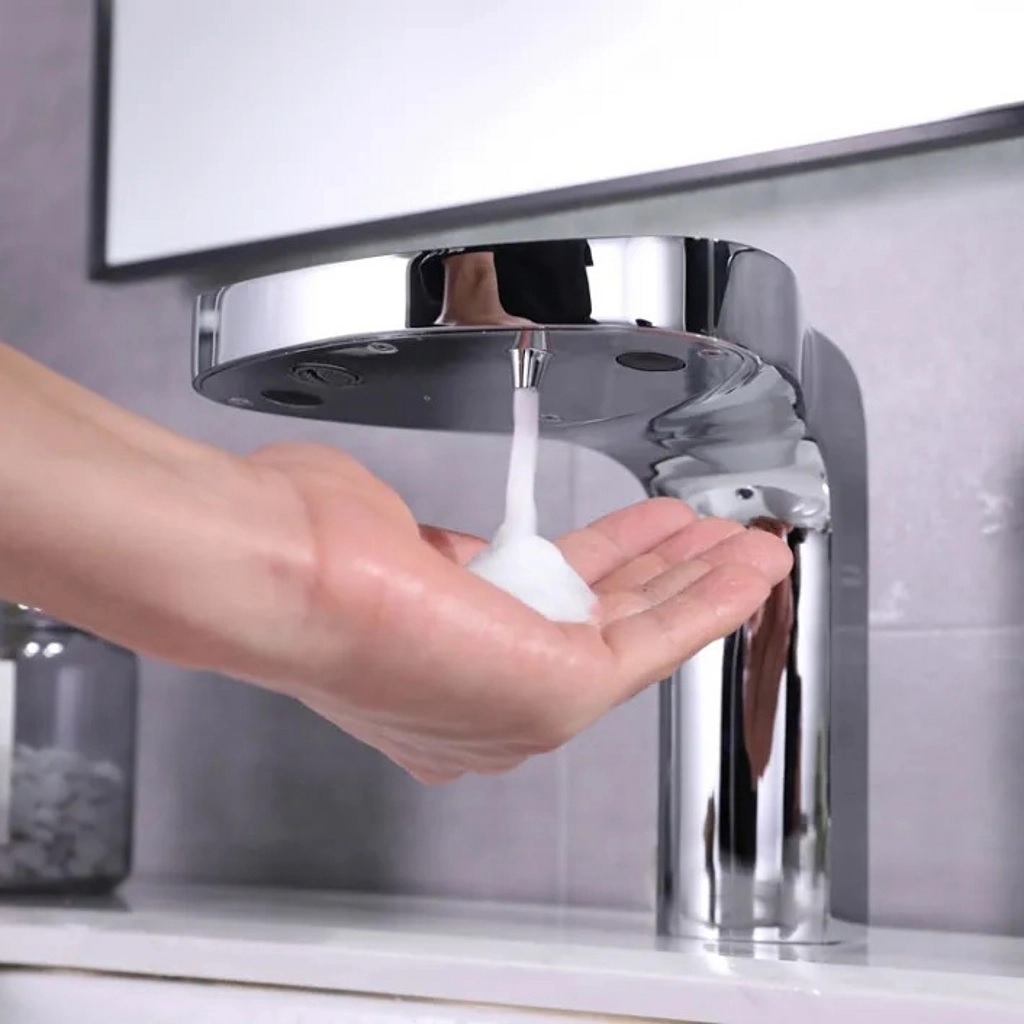
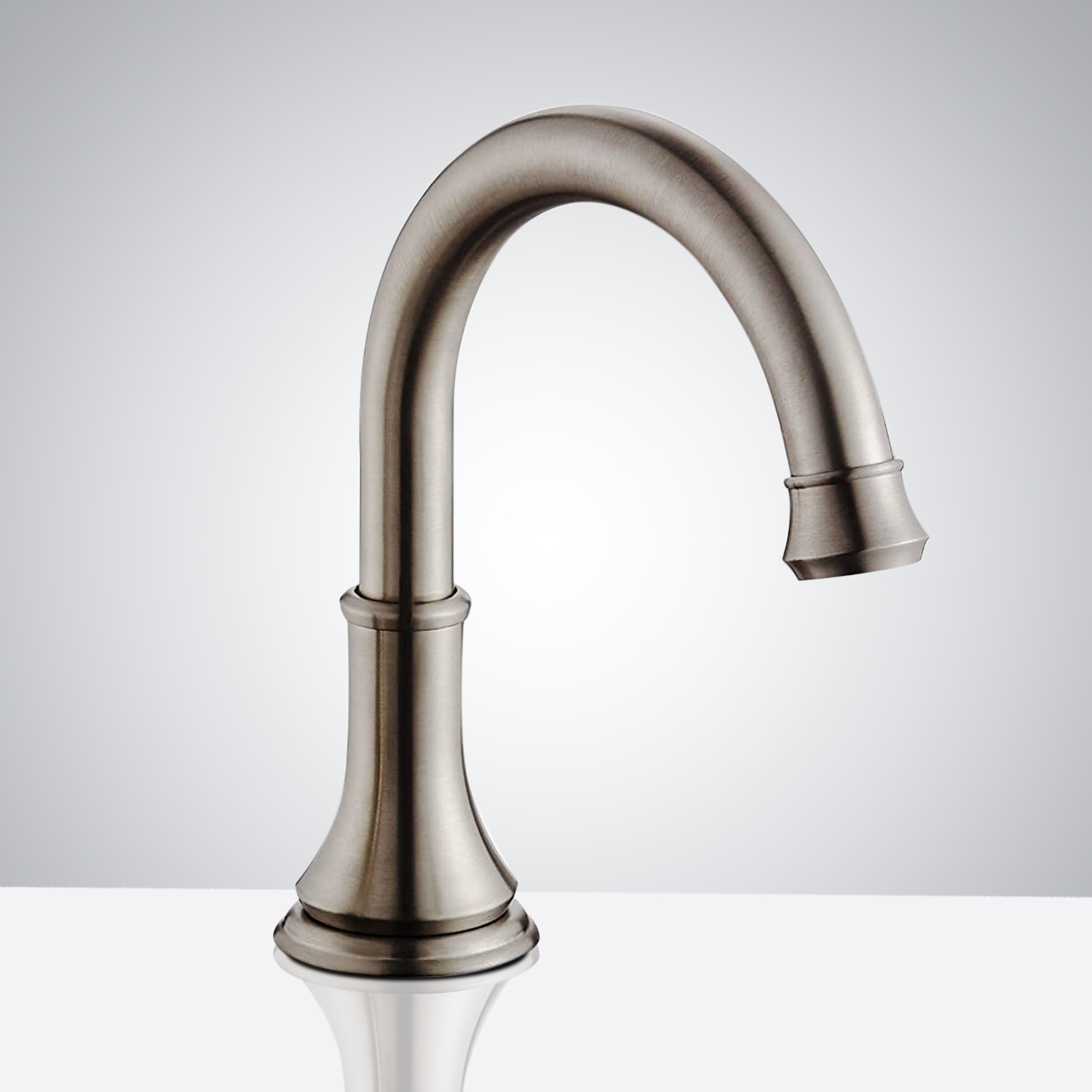
BathSelect commercial touchless faucet and soap dispenser systems include specification-focused options for high-traffic restrooms, with selected faucet configurations rated for 1,000–3,000 activations per day. Available infrared and Time-of-Flight sensing options may provide approximately 100–350 millisecond response times and adjustable detection ranges from 40–180 mm, depending on the model. Selected water-efficient faucets offer controlled flow rates from 0.35–0.50 GPM and operating pressure ranges of 10–100 psi. Available configurations may include solid-brass or stainless-steel construction, serviceable solenoids, replaceable components, accessible filters, and AC/DC power options to support installation and ongoing maintenance. PVD, brushed, polished, and matte finishes are available across selected models for coordinated commercial restroom specifications. Depending on the individual product, applicable specifications or certifications may include ADA accessibility provisions, ASSE 1070 temperature-control requirements, WaterSense criteria, NSF/ANSI 61 and 372, UPC, IPC, UL, ETL, or CSA requirements. Architects, engineers, contractors, and facility teams should confirm individual product specifications when selecting coordinated touchless fixtures for a project.
Touchless Hygiene System • Faucet + Soap Dispenser Pairing
Full touchless handwashing workflow for high-traffic restrooms
This collection pairs motion-activated faucets with touchless soap dispensers to reduce contact points,
support hygienic handwashing workflows, and simplify daily cleaning routines.
Designed for environments where dependable, reduced-contact operation matters.
Sensor Behavior
Validate activation range, sensor settings, and shutoff timing according to the selected model and installation.
Power Architecture
Choose available battery, hardwired, or dual-power configurations based on project requirements and service access.
Flow + Water Control
Match faucet flow and water-control requirements to local codes, basin configuration, and individual product specifications.
Soap Delivery + Refills
Confirm dispensing configuration, refill access, reservoir requirements, and soap compatibility for the selected dispenser.
Pairing Logic (What makes touchless + touchless worth it)
Reduced contact: touch-free activation helps limit the need to handle faucet and dispenser controls.
Simplified cleaning: fewer frequently handled controls can support routine restroom maintenance.
Coordinated operation: properly selected faucet and dispenser configurations support an intuitive handwashing sequence.
Spec alignment: coordinated finishes help maintain a consistent appearance across the sink area.
Best-Fit Environments
Airports • Healthcare • Universities • Stadiums • Government Facilities • Class A Offices
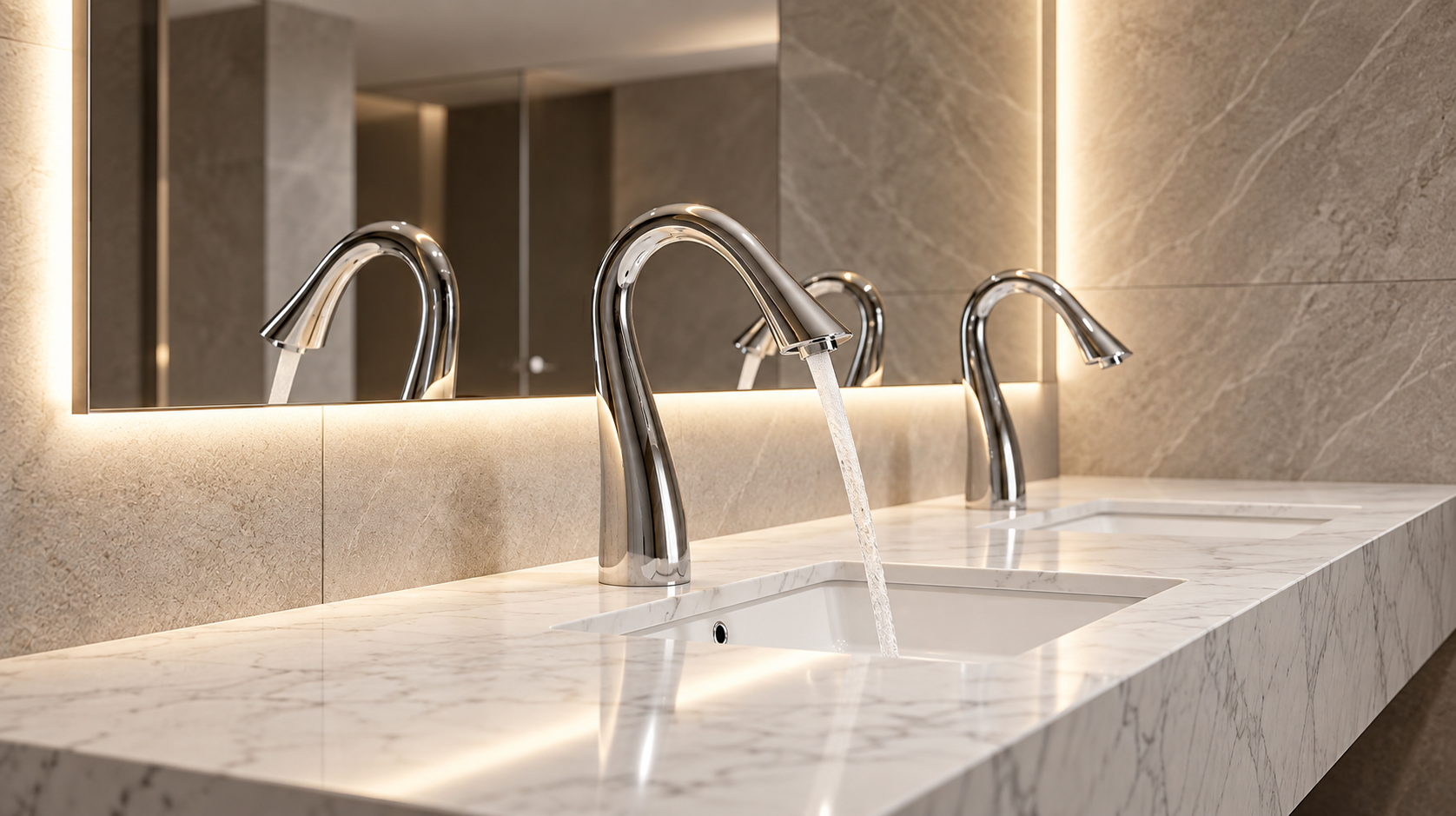
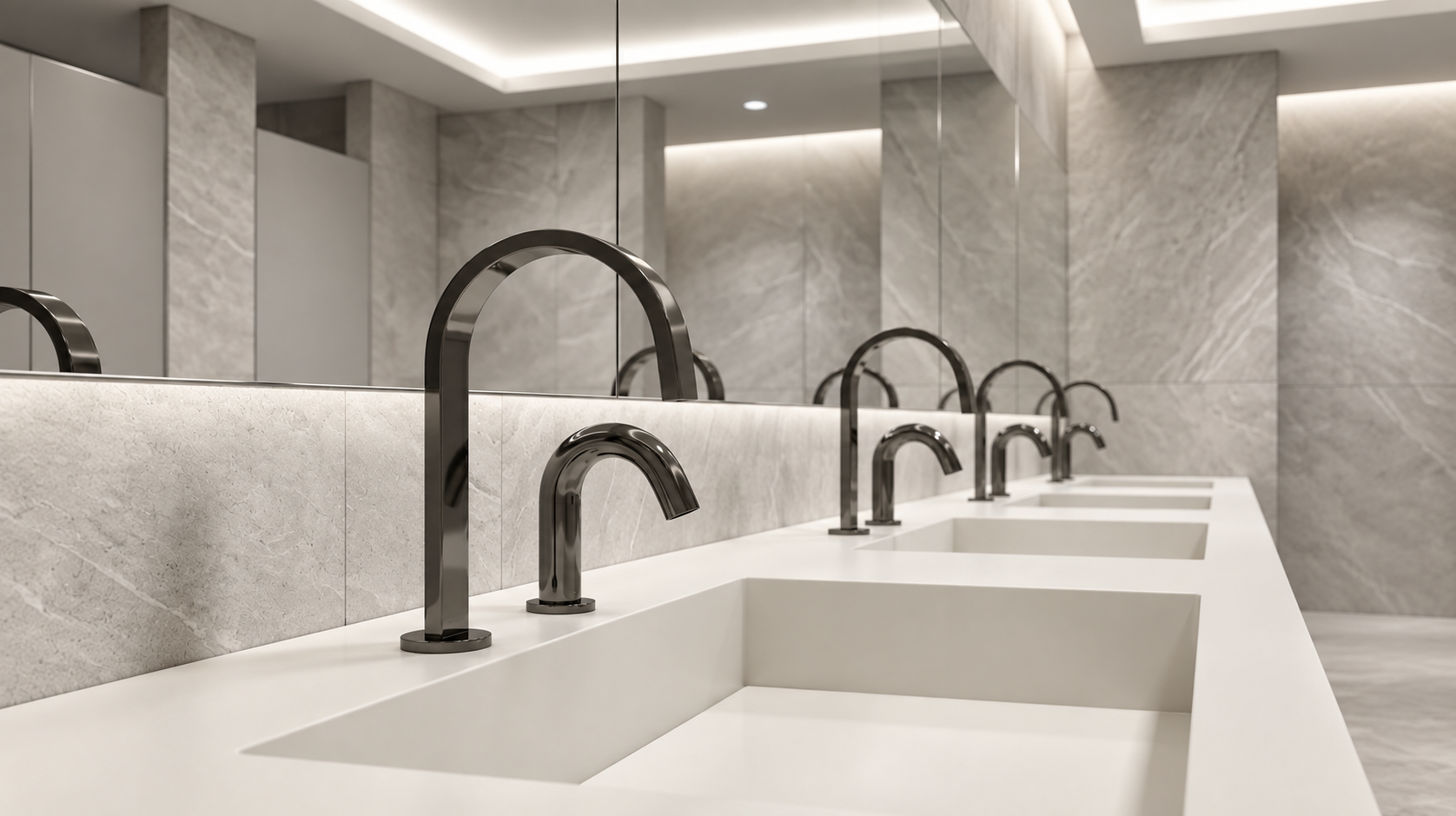
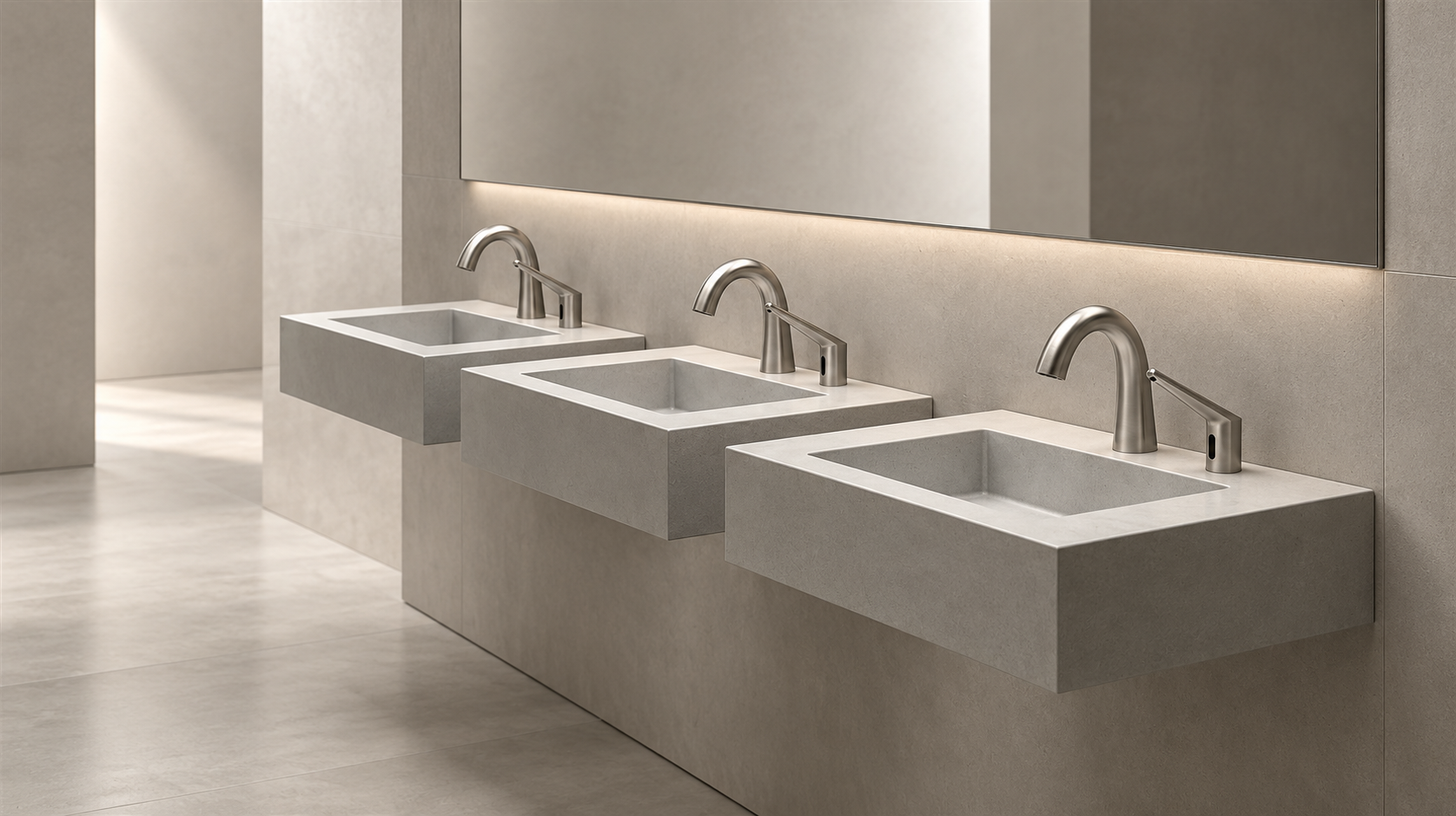
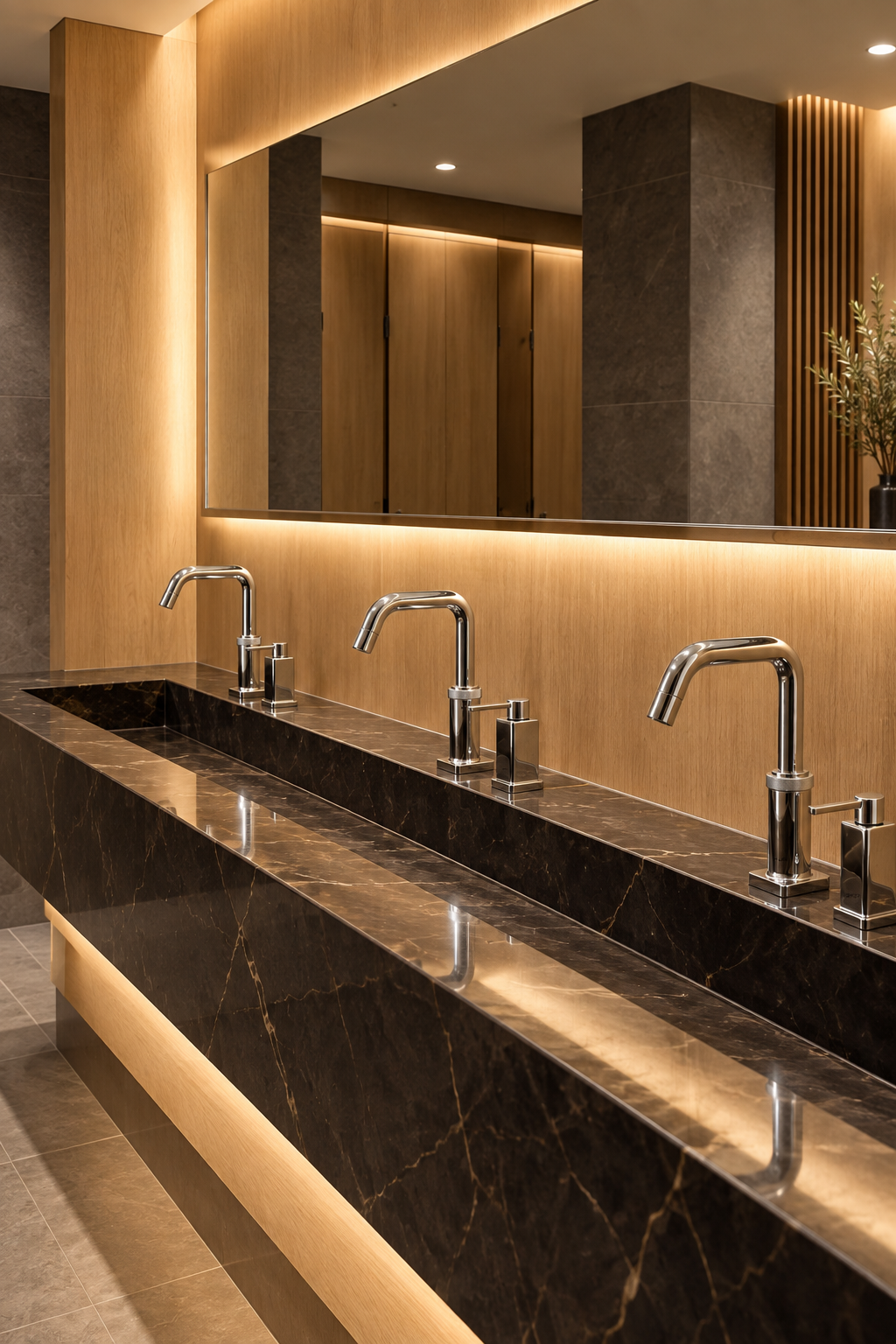
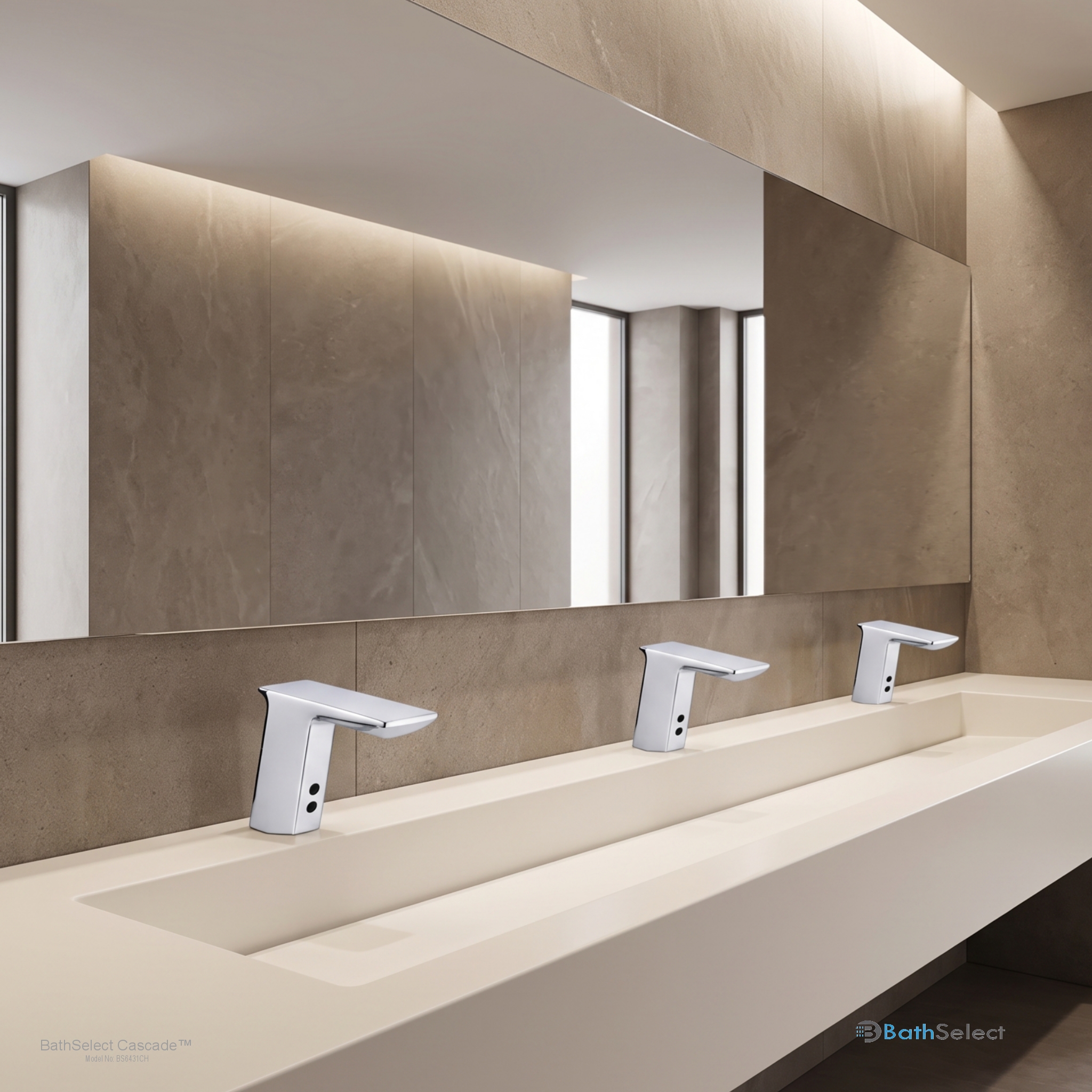
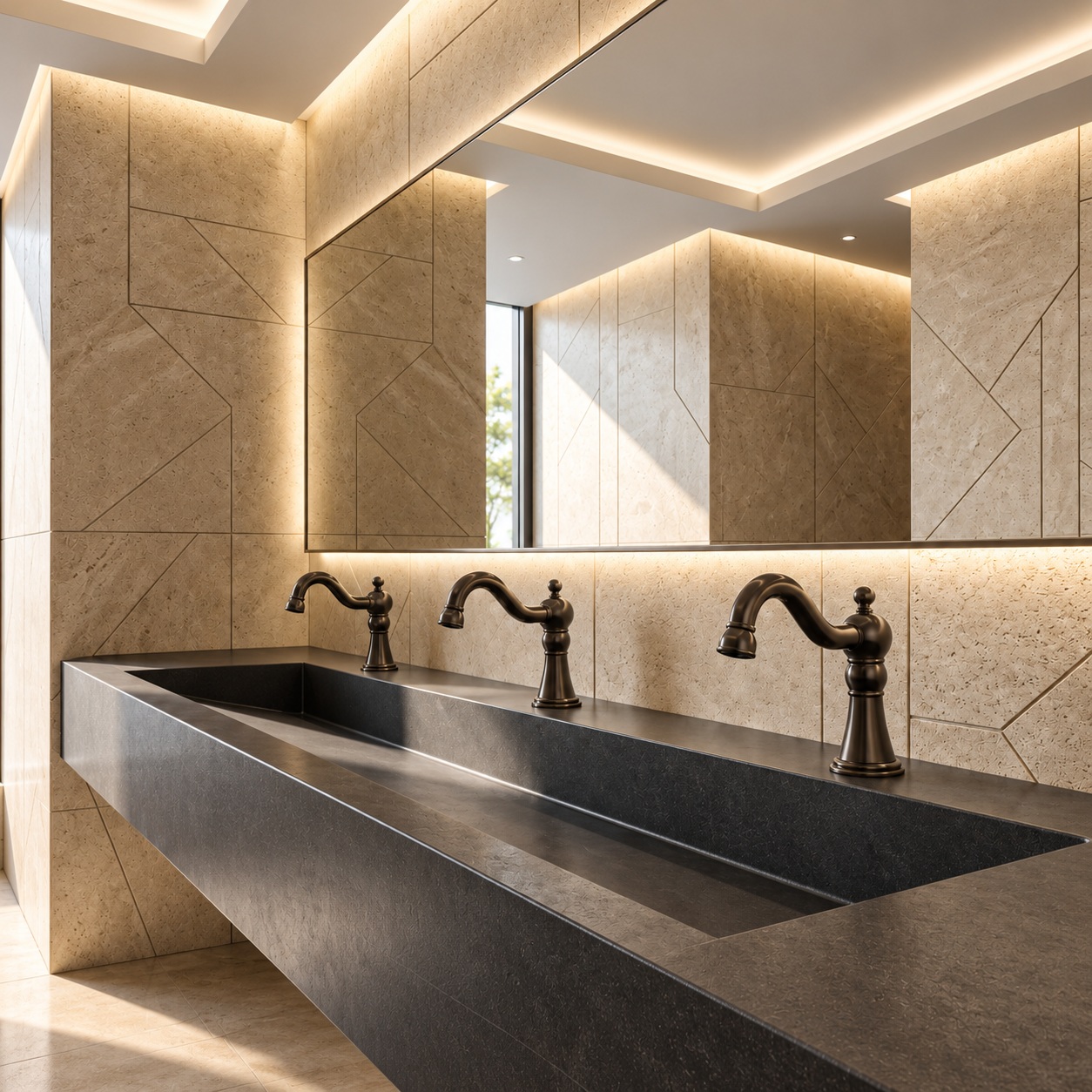
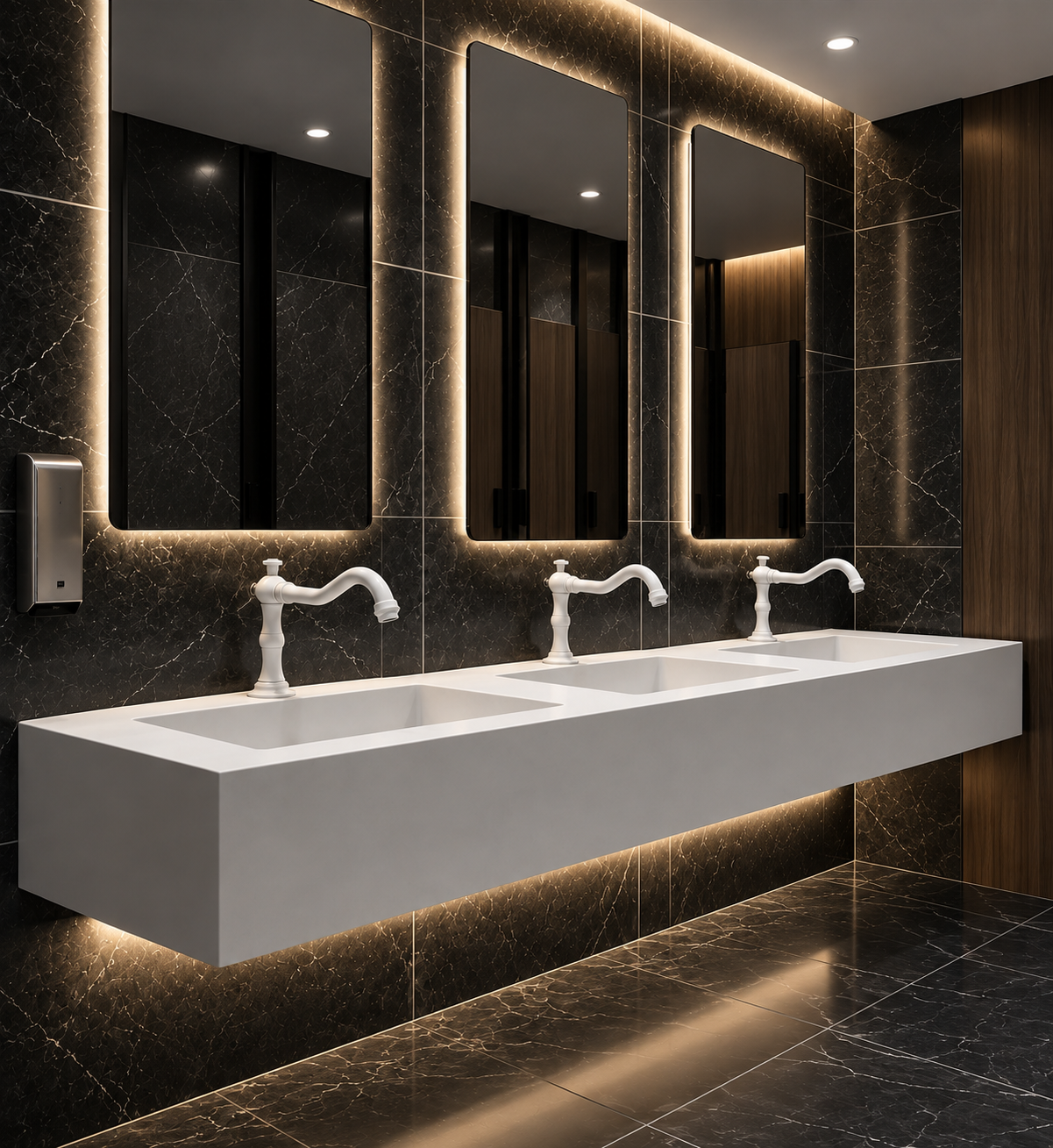
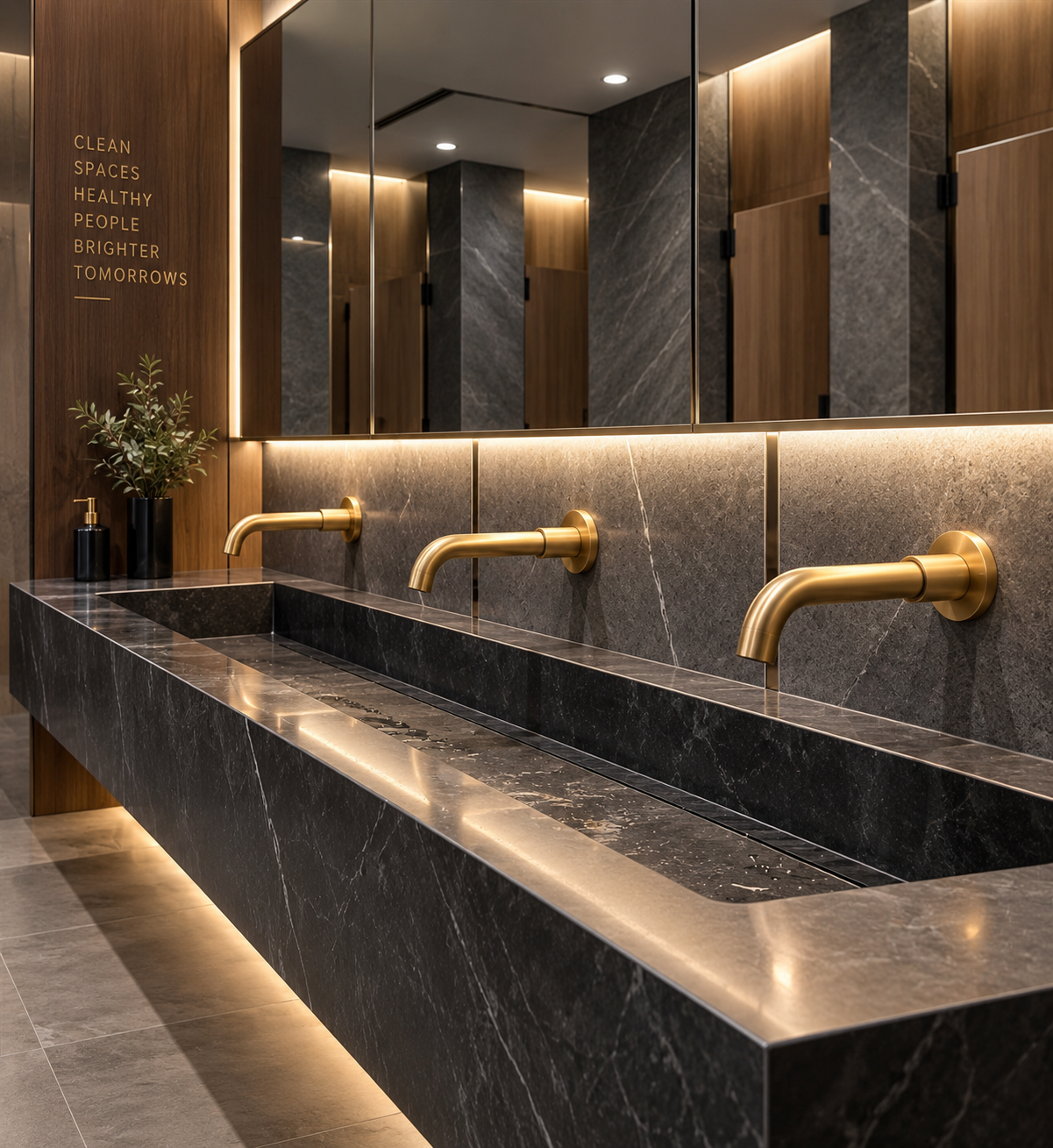
Coordinate touchless faucets with automatic soap dispensers to create a streamlined hands-free sink area for commercial, hospitality, healthcare, office, and other restroom projects. Available configurations can support different mounting styles, finishes, sensor technologies, and installation requirements.
For projects requiring specialized faucet options, explore related wall-mount, commercial, and finish-specific touchless faucet collections while using this category for coordinated faucet and automatic soap dispenser solutions.
Touchless faucets and automatic soap dispensers create a coordinated hands-free handwashing system for commercial, hospitality, healthcare, office, educational, and modern restroom projects. Pairing sensor-operated fixtures at the same sink helps reduce unnecessary contact with controls while providing a clean, streamlined user experience. BathSelect offers configurations in multiple mounting styles and finishes, with available sensor, power, water-control, and dispensing options varying by model.
When planning a coordinated touchless sink area, consider faucet reach, dispenser placement, basin dimensions, sensor range, power access, soap compatibility, refill access, and finish coordination. Individual product specifications should be reviewed before installation, particularly for commercial projects where usage levels, maintenance access, water-control requirements, and electrical provisions may differ. For faucet-only requirements, explore our
touchless faucet collection;
for commercial faucet specifications, visit
commercial sensor faucets.
Motion Sensor Faucets & Automatic Soap Dispensers
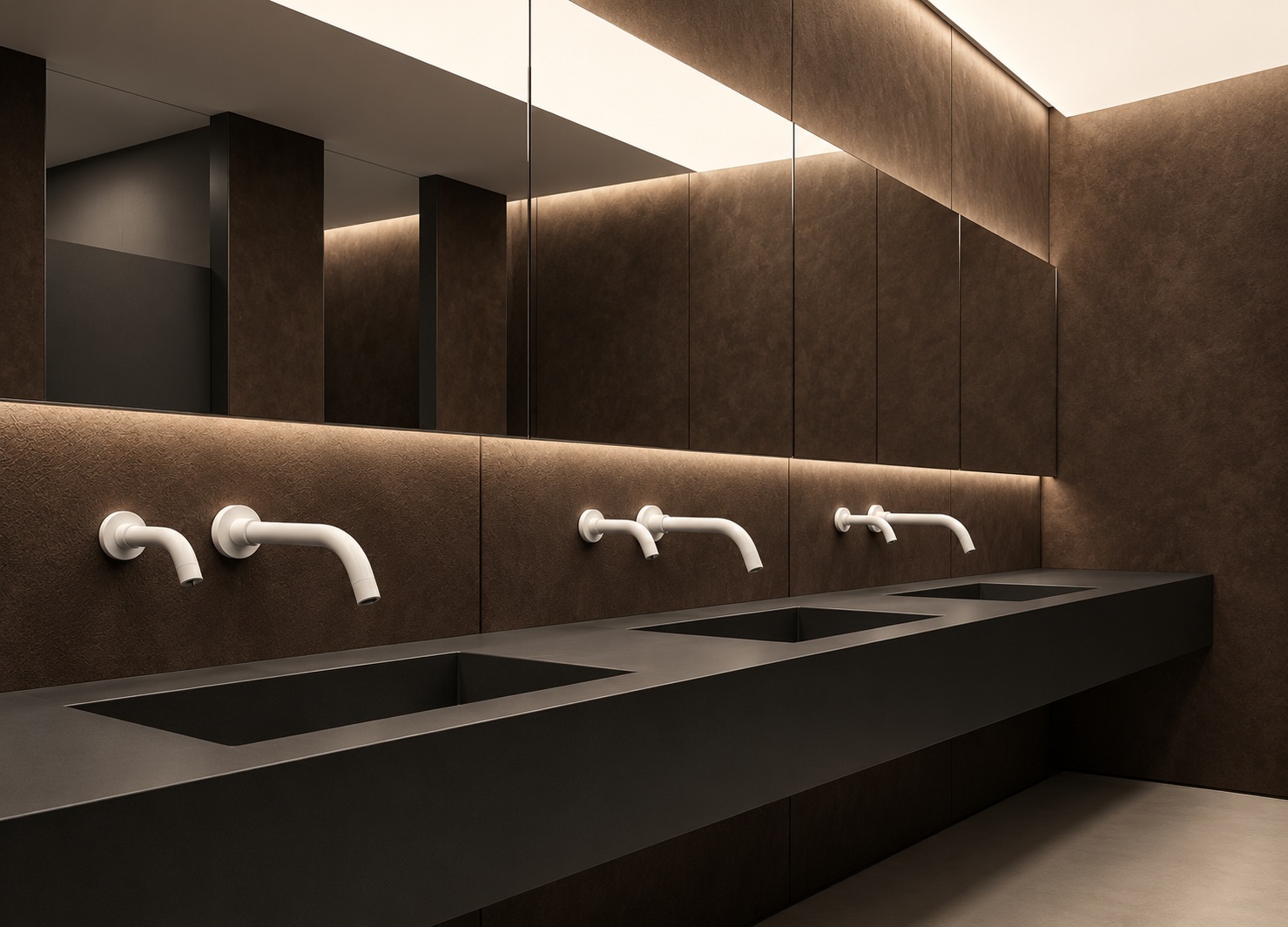
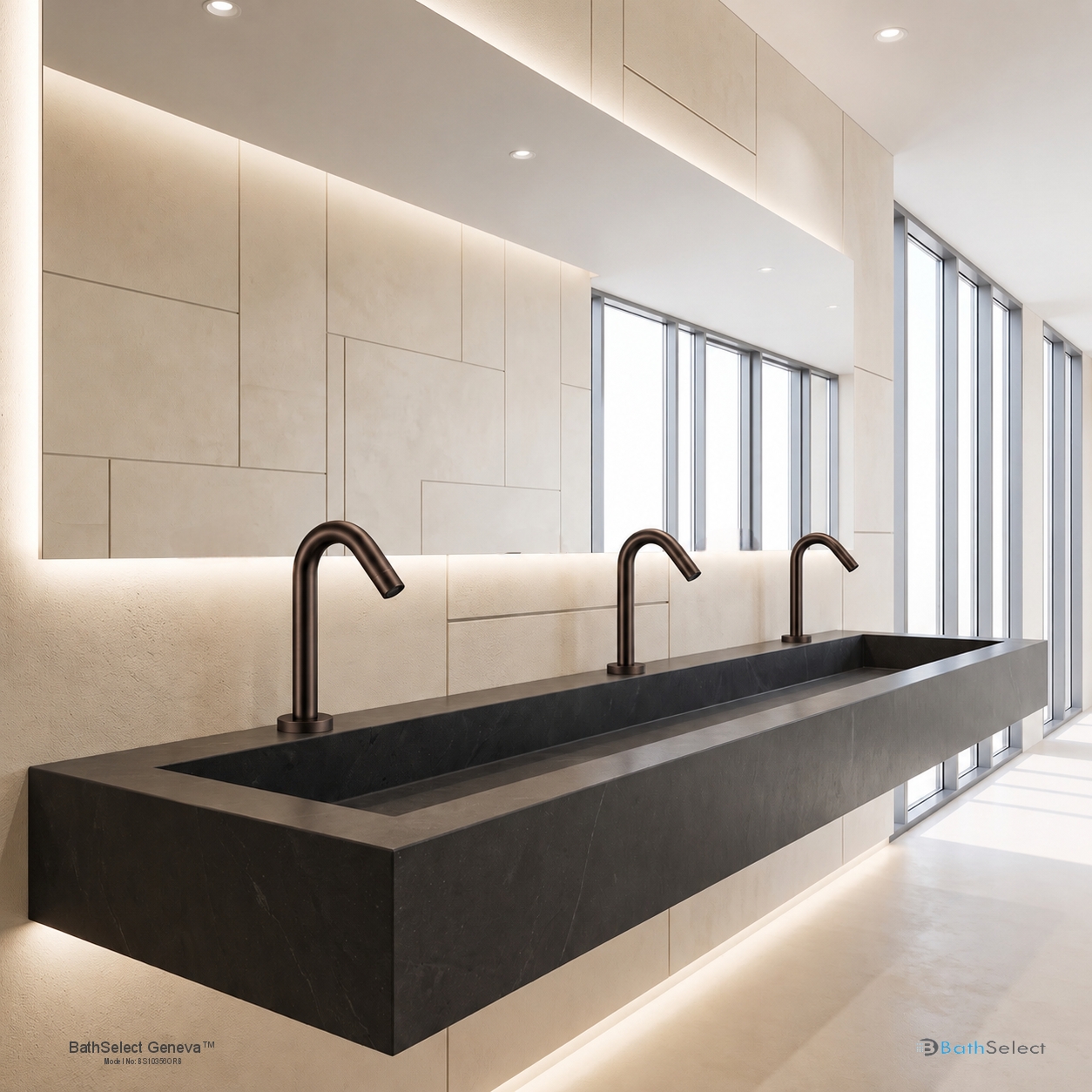
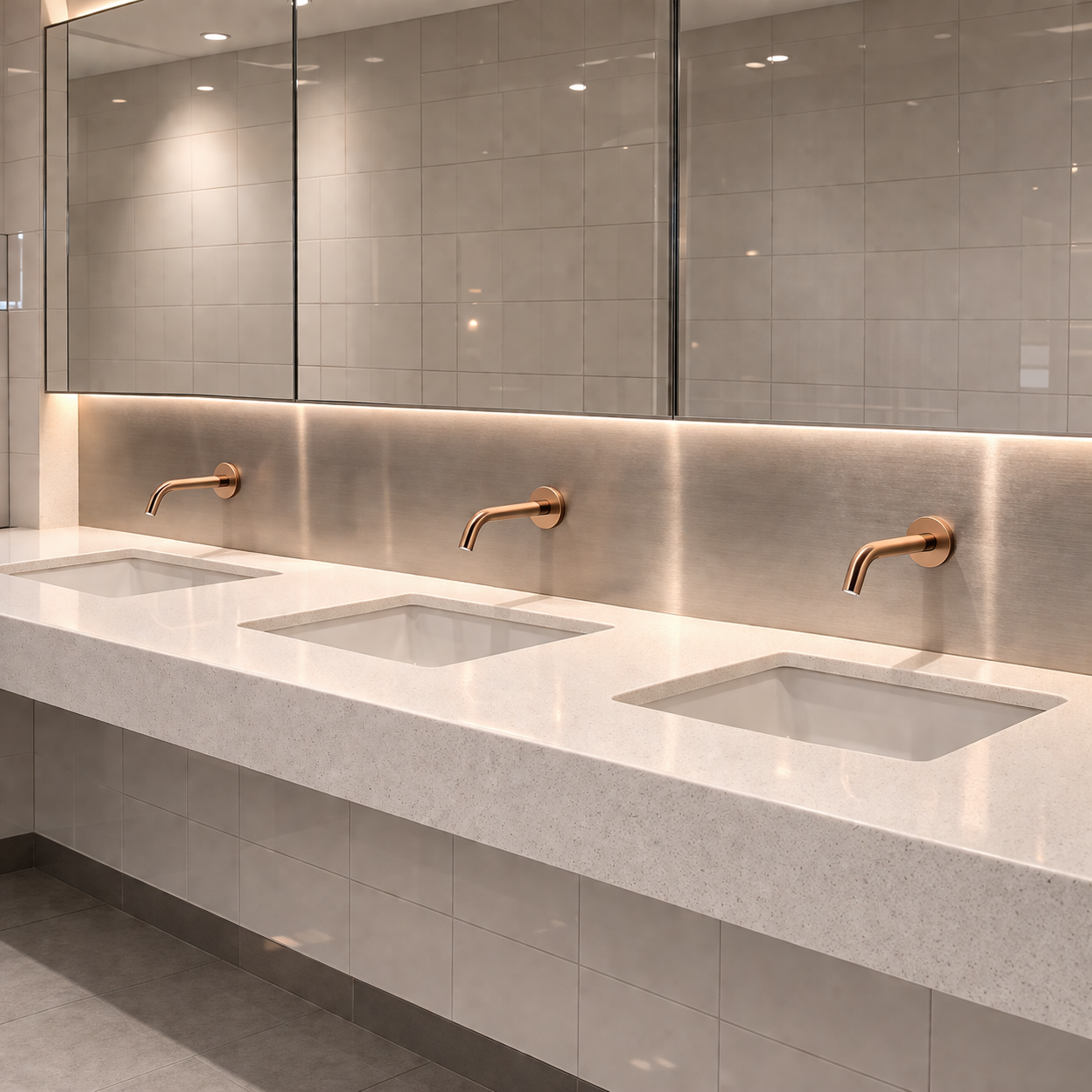
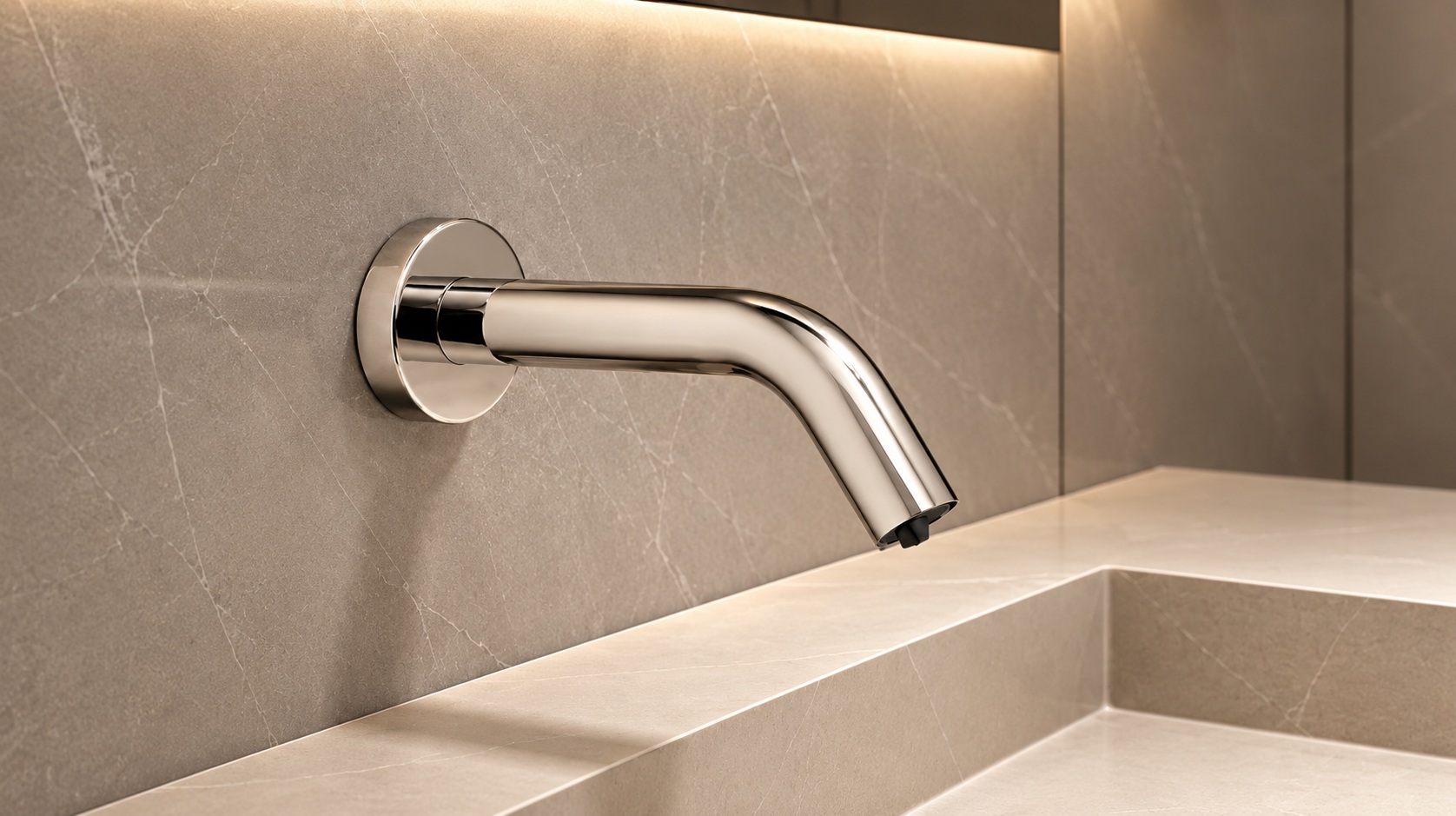
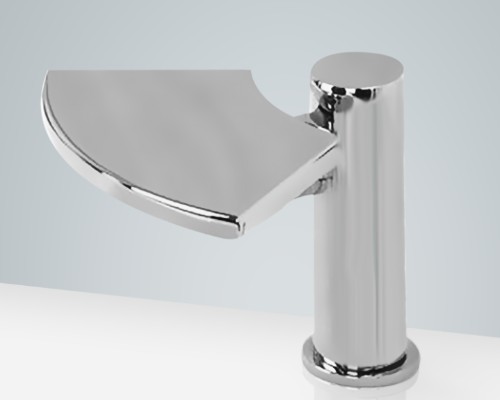
Coordinate motion sensor faucets with automatic soap dispensers for a streamlined sink area designed around touch-free operation. Available configurations may include deck-mount or wall-mount fixtures, different sensor technologies, multiple power options, and coordinated finishes. Materials, mounting requirements, dispensing systems, and other specifications vary by individual model,
so project requirements should be confirmed before selection.
Coordinated Touchless Restroom Systems
A coordinated faucet and dispenser arrangement allows architects, contractors, and facility teams to plan the sink area as one functional system rather than selecting each fixture independently. Faucet height and reach, dispenser position, sensor zones, basin clearance, power access, and finish should be considered together.
This approach is particularly useful for commercial and shared restrooms where service access and consistent fixture placement are important.
Benefits of Coordinated Touchless Systems
Touch-free faucet and soap dispenser configurations can help reduce the number of controls users need to touch during handwashing. Coordinating both fixtures can also support consistent placement, simplified specification, and a unified appearance across the sink area.
For high-use projects, verify model-specific sensor settings, power requirements, water-control specifications, refill access, soap compatibility, and maintenance requirements before installation.
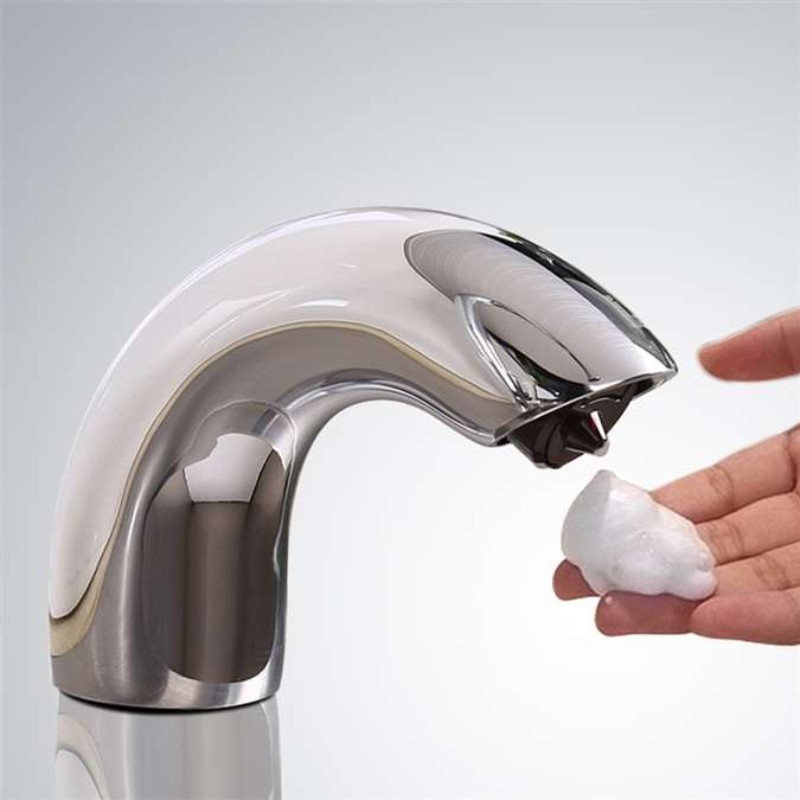
Automatic soap dispensers can be paired with sensor-operated faucets to create a coordinated hands-free sink area. Available dispenser configurations vary by mounting style, finish, soap compatibility, power source, refill method, reservoir arrangement, and sensor technology. Review the specifications of each faucet and dispenser when planning a combined installation.
Technical FAQs for Touchless Faucet & Soap Dispenser Systems
These technical FAQs address operation, installation, power requirements, sensor performance,
maintenance, and specification considerations for touchless faucet and automatic soap dispenser systems.
How do sensor-activated faucets control water flow?
Depending on the model, an electronic sensor detects hand presence and signals a solenoid
valve to control water flow without requiring manual faucet handles.
How do automatic soap dispensers operate?
A sensor detects a user's hand and activates the dispenser mechanism. Dispensing amount,
sensor range, soap compatibility, reservoir design, and power requirements vary by model.
What should be considered when pairing a faucet and soap dispenser?
Consider basin dimensions, faucet reach, dispenser position, deck-hole requirements,
sensor zones, power access, finish coordination, refill access, and maintenance clearance.
Can faucet and dispenser sensor ranges be adjusted independently?
Some models provide adjustable sensing parameters while others use preset detection ranges.
Confirm the specifications and adjustment procedures for each selected fixture.
How is water temperature managed in automatic faucet systems?
Temperature-control arrangements vary by product and installation. Selected systems may use
mechanical or thermostatic mixing components located below deck or elsewhere in the water-supply configuration.
What power options are available for touchless systems?
Depending on the individual faucet or dispenser, available configurations may include battery,
AC, or combined AC/DC power. Verify electrical requirements before installation.
Can deck-mount and wall-mount touchless fixtures be used in coordinated projects?
Yes, where compatible models are available. Mounting selection should account for sink design,
plumbing location, deck or wall construction, sensor positioning, service access, and manufacturer requirements.
What maintenance is commonly required?
Maintenance depends on the selected products and may include cleaning sensor windows,
inspecting inlet filters, replacing batteries where applicable, refilling soap reservoirs,
cleaning dispensing components, and checking connections.
What can cause inconsistent sensor activation?
Sensor performance can be affected by installation position, reflective surfaces,
environmental conditions, power condition, sensor settings, or obstructions.
Troubleshooting should follow the instructions for the individual model.
What should architects and contractors verify before specification?
Confirm dimensions, mounting requirements, water and power connections, sensor specifications,
soap compatibility, finish, basin clearance, maintenance access, and any project-specific
certification or code requirements for each selected product.



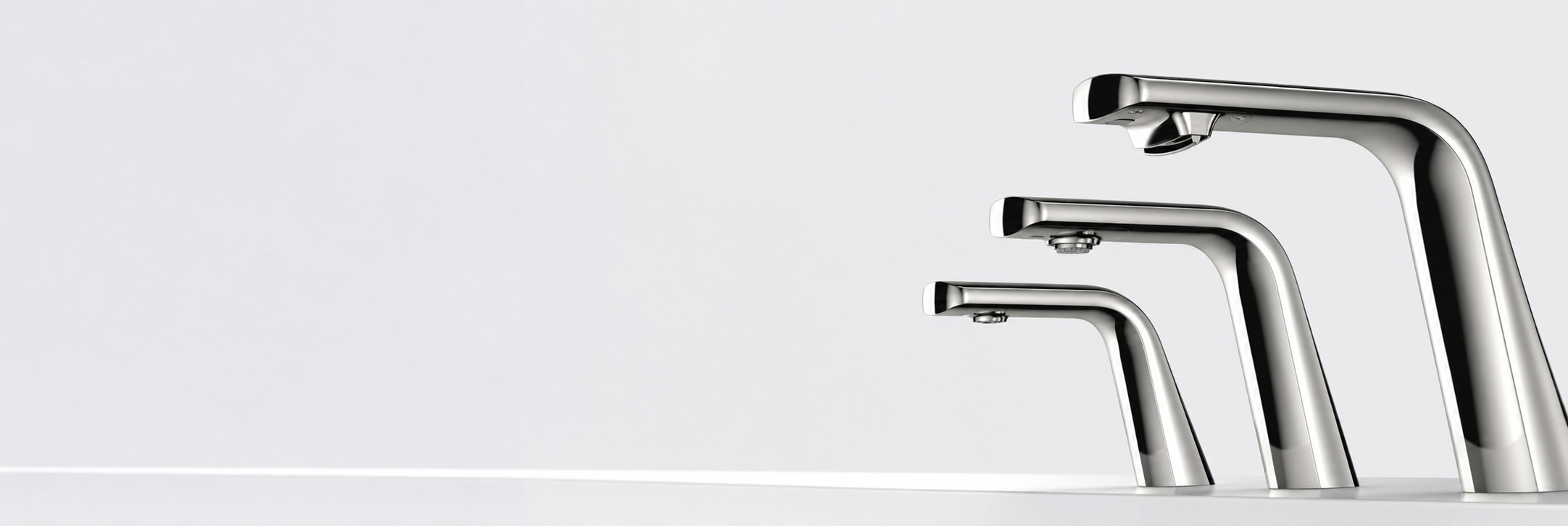
 Touchless Faucet +
 Deck-Mount
 Wall-Mount
 Automatic Soap
 Commercial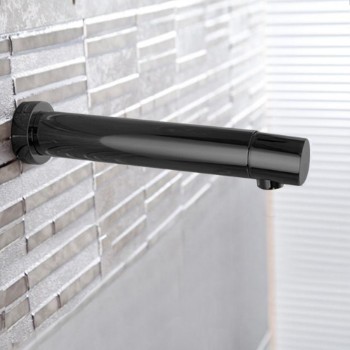

.jpg)
.jpg)